
Introduction
Recombinant antibodies have revolutionized laboratory research, offering unprecedented specificity, reproducibility, and versatility. Unlike traditional monoclonal or polyclonal antibodies, recombinant antibodies are produced through DNA technology, ensuring consistent performance and reducing batch-to-batch variability. They are widely used in ELISA, immunofluorescence (IF), Western blotting, and flow cytometry for both basic research and translational studies.
This guide provides researchers with a comprehensive understanding of recombinant antibodies, including selection criteria, practical tips, applications, and advanced optimization strategies.
1. What Are Recombinant Antibodies?
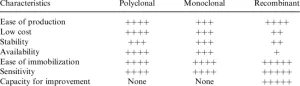
Recombinant antibodies are generated using genetic engineering, where the DNA sequence coding for the antibody’s variable region is cloned into an expression system, such as E. coli, mammalian cells, or yeast. This approach allows precise control over the antibody’s binding properties and ensures high reproducibility across experiments.
Advantages over traditional antibodies:
-
Consistent performance between lots
-
High specificity for target epitopes
-
Reduced animal usage (ethical production)
-
Compatibility with multiple labels (fluorophores, enzymes, biotin)
2. Key Applications in the Laboratory
2.1 ELISA (Enzyme-Linked Immunosorbent Assay)
-
Recombinant antibodies provide precise quantification of proteins.
-
High specificity reduces background signal and false positives.
-
Can be used as capture or detection antibodies.
2.2 Immunofluorescence (IF)
-
Enables visualization of proteins within cells or tissue sections.
-
Recombinant antibodies produce clean, punctate staining with minimal cross-reactivity.
2.3 Western Blotting
-
Detect target proteins with high sensitivity and low background.
-
Recombinant antibodies are ideal for detecting low-abundance proteins.
2.4 Flow Cytometry
-
Reliable detection of cell surface markers.
-
Recombinant antibodies reduce cross-reactivity and improve gating accuracy.
3. How to Choose the Right Recombinant Antibody
| Factor | What to Consider | Practical Tip |
|---|---|---|
| Target Antigen | Verify antibody is validated for your protein of interest | Check datasheets for specificity and tested applications |
| Application | IF, ELISA, Western blot, Flow cytometry | Select antibodies optimized for your assay type |
| Species Reactivity | Mouse, human, rat, other models | Ensure cross-reactivity if using non-human tissue |
| Affinity & Epitope | High affinity improves sensitivity | Avoid antibodies that bind non-target epitopes |
| Label Compatibility | Fluorophores, enzymes, biotin | Match secondary detection systems |
4. Tips for Optimizing Recombinant Antibody Use
-
Optimize antibody concentration – Start with recommended dilutions, then titrate for your system.
-
Include controls – Positive tissue or cell controls, negative controls without primary antibody.
-
Use proper secondary antibodies – Ensure minimal cross-reactivity and matched species.
-
Optimize incubation conditions – Temperature and time can significantly affect staining quality.
-
Use anti-fade mounting media – Preserves fluorescence for microscopy and imaging.
5. Case Study: Recombinant Antibodies in Autoimmune Research
Scenario: Detecting GAD65 antibodies in pancreatic islets for type 1 diabetes studies.
Problem: Traditional polyclonal antibodies showed diffuse, inconsistent staining.
Solution with Recombinant Antibodies:
-
High-affinity recombinant monoclonal anti-GAD65 applied.
-
Optimized blocking buffer (5% BSA + 0.1% Tween-20).
-
Alexa Fluor-conjugated secondary antibody for bright, specific signal.
Result: Clear, reproducible cytoplasmic staining of beta cells with minimal background, enabling confident data interpretation.
6. Common Pitfalls and How to Avoid Them
| Pitfall | Cause | Solution |
|---|---|---|
| High background | Non-specific binding | Improve blocking, validate secondary antibody |
| Weak signal | Low affinity or dilution too high | Optimize primary antibody concentration |
| Batch variability | Traditional monoclonal/polyclonal | Use recombinant antibodies for consistency |
| Cross-reactivity | Non-specific epitope recognition | Validate with controls, use species-specific secondary |
Conclusion
Recombinant antibodies provide researchers with highly reliable, reproducible, and versatile tools for modern laboratory applications. By carefully selecting the right recombinant antibody, optimizing experimental conditions, and following best practices, laboratories can generate high-quality, reproducible data, improving research outcomes and supporting discoveries in fields such as immunology, autoimmune diseases, and molecular biology.